That's the honest version. Here's the detail so you can decide for yourself.
Same plant, different standard
Tellicherry pepper is not a separate variety. All black pepper — the jar at your local kirana and the premium pouch alike — comes from Piper nigrum. "Tellicherry" is a trade grade for the largest, ripest berries of the Malabar coast harvest, named after the Kerala port (Thalassery) that historically exported the best of it.
The top grade, TGSEB (Tellicherry Garbled Special Extra Bold), admits only cleaned, sorted berries of 4.75 mm and above — roughly the top few percent of a harvest. Standard trade pepper runs around 3–4 mm. Full grading guide here →
So the real question isn't "Tellicherry or black pepper?" It's "top-of-harvest or rest-of-harvest?"
Where you'll taste the difference
Aroma and complexity. The extra ripening time in a bold berry builds more volatile oils — the compounds behind pepper's citrus, pine and floral notes. Crack a TGSEB berry next to ordinary pepper and the difference is immediate: bright and layered versus flat and sharp.
The character of the heat. Both are hot; piperine is piperine. But in a ripe bold berry the pungency arrives wrapped in aroma — rounder, less harsh. Ordinary pepper often delivers the sting without the perfume.
Freshness at grind. Whole TGSEB berries hold their oils until you crack them. Pre-ground pepper, whatever its origin, loses most of its aroma within weeks of grinding. This is why the fairest comparison is whole-vs-whole — and why whole TGSEB beats even freshly bought ground pepper comfortably.

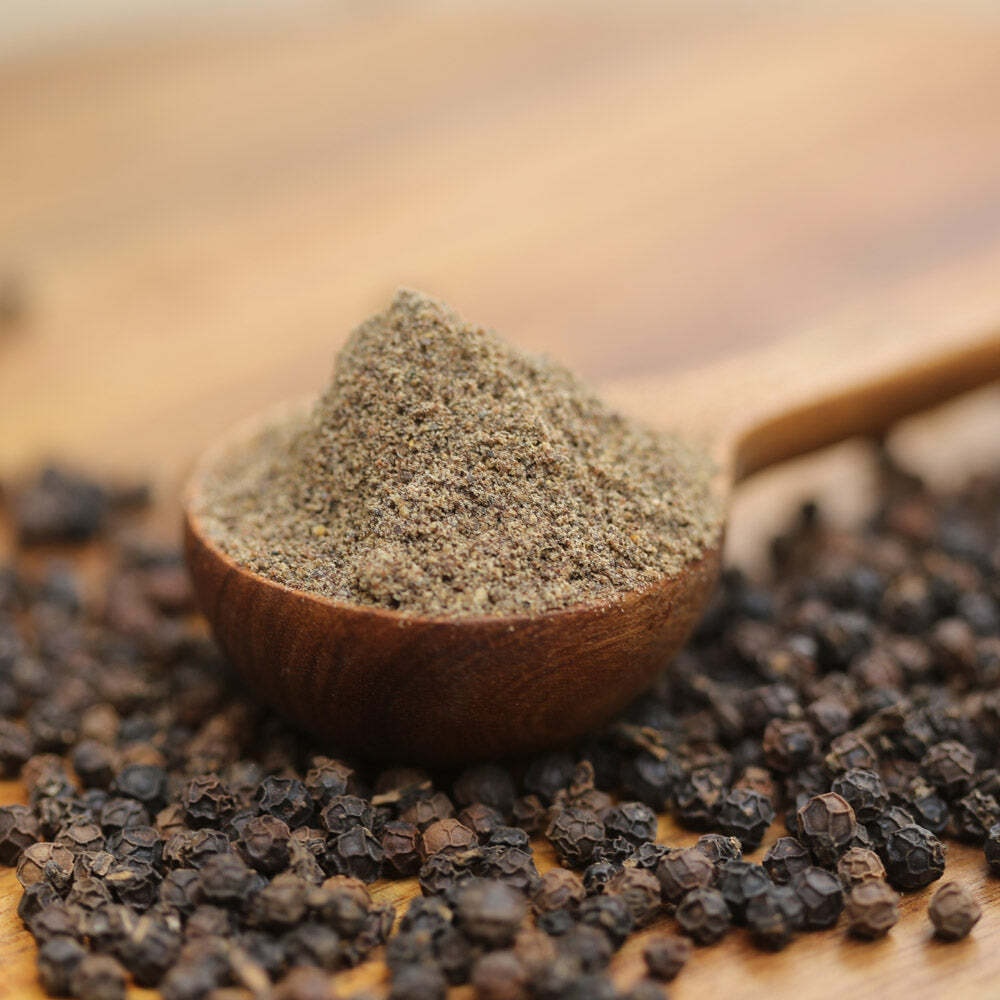
Where the difference shows — and where it doesn't
TGSEB earns its price:
- Fresh-cracked as a finishing pepper — steak, grilled paneer, fried eggs, salads, soups at the table
- Pepper-forward dishes — cacio e pepe, pepper chicken (Chettinad style), steak au poivre, rasam where pepper leads
- Anywhere pepper is added at the end of cooking, so the volatile oils survive to the plate
Regular pepper is genuinely fine:
- Long-simmered gravies, dals and stocks, where hours of heat drive off the delicate aromatics anyway
- Spice blends where pepper is one voice among ten
- Bulk marinades and pickling
Cooking heat destroys exactly the compounds you're paying a premium for. Use TGSEB where those compounds reach your nose.
The price-per-use maths
Premium pepper looks expensive per pack and cheap per meal. A typical grind over a dish uses well under half a gram. A 100 g pouch of TGSEB delivers a few hundred servings — so even at double or triple the price of ordinary pepper, the extra cost works out to paise per meal. For an ingredient you may use daily, it is one of the cheapest genuine upgrades in your kitchen.
At a glance
| Regular black pepper | Tellicherry TGSEB | |
|---|---|---|
| Berry size | ~3–4 mm | 4.75 mm+ |
| Share of harvest | Majority | Top few percent |
| Aroma | Sharp, one-dimensional | Bright, citrus/floral, layered |
| Heat | Harsh spike | Rounder, aromatic heat |
| Best for | Simmered dishes, blends | Finishing, grinding fresh, pepper-forward dishes |
| Cost per meal | Minimal | Paise more |
The verdict
Buy TGSEB if you own a pepper mill and cook anything where pepper is meant to be tasted. Keep ordinary pepper for the stockpot. Most serious home kitchens end up with both — and use the good one far more often than they expected.
Try the top of the harvest
Nature Presents TGSEB Tellicherry peppercorns — whole, garbled, 4.75 mm+ berries from Kerala.